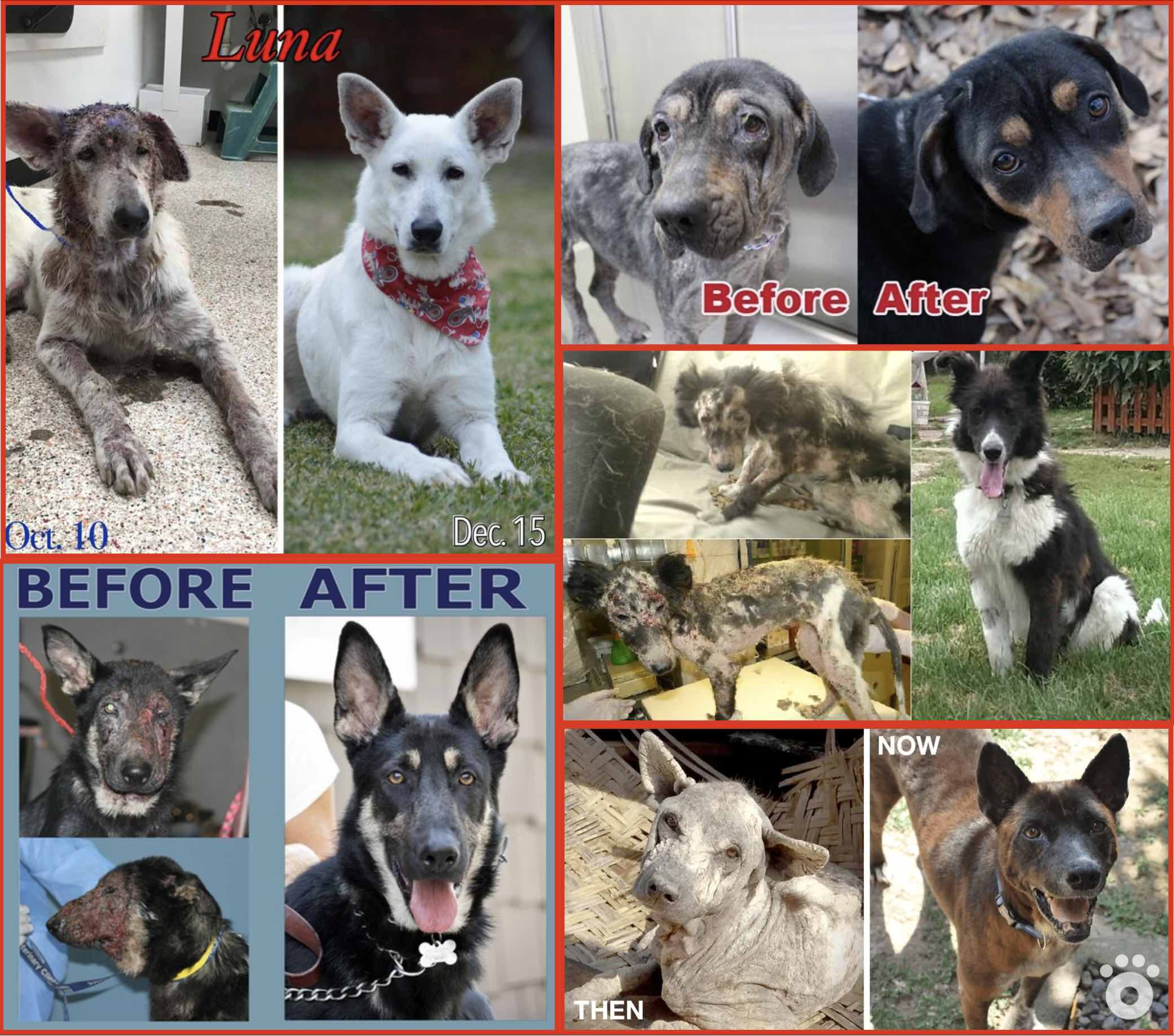
Summary: I’ve spent a lot of time filling in family details here, but the gist of what I’m saying is that we’ve had a single, long-term, nuclear family, owning one of the territories here in San Francisco, generationally now for four generations. At the beginning of this year, 2024, disruption was caused in the family’s tight hold of the territory when an alpha male, Scowl, left and the aging alpha female, Chert, headed into her twilight years, even contracting a severe case of mange at the end of her life. Another family came in and pupped here, but they did so without kicking out the resident offspring or weakened alpha female who had been here so long. Now, as winter 2024 approaches, that “intruder” family appears to have left, and it’s Chert’s offspring who again — without Chert — seem to have control over the territory: they are fourth-generation owners (and I’m not talking about 4th litter owners, I’m talking about a territory passed down from mother to son to his daughter and now to her daughter = four generations). This is the history of one territory over 20 years.
Our long-term alpha female, Chert, is no longer around, having reached the ripe old age of eleven and a half years. A daughter and son appear to be the new alphas in the territory — so we are stable again. But Chert’s last waning months led to a disorganized territorial situation!


Chert’s 2-year old son and daughter are behaving like the alphas now
A Little History: Chert’s story actually goes back to 2013 when she was born, and her family’s goes back to 2004 in this park. But it was in 2009 that I started focusing on the relationships of the individuals living on this territory at the time, and figuring out the extent of that territory. The territory is average in size for an urban territory. However, territories here in the city of San Francisco and most urban areas run less than half the size of rural ones, possibly due to a ready supply of food — it turns out that human refuse figures larger than thought [Tali Caspi, details TBP]. The territory covers four of what I call *pods* or *hubs* towards the center of the city — these are substantial parks — and only one family has owned it, generationally, for all that time: nuclear family members are the only ones ever seen throughout the extent of the territory, with the exception of very temporary suitors or dispersers. In San Francisco, we have approximately 20 territories — each about the size of the Presidio — each occupied by one family.

Above is the early genealogy I put together, showing how the family evolved: it shows that there has been plenty of inbreeding within this one territory. Dr. Ben Sacks, the geneticist at UC Davis assured me that inbreeding was not a problem as long as new blood eventually entered the scene, and it always has eventually.
In 2009, the territory was owned by a family that consisted of the Maeve, the alpha female, Toughy was the alpha male and there were two male pups — Silver and Bruno. Toughy’s life ended suddenly and brutally when he ingested rat poison before his offspring were weaned. A small dog suffered the same fate at the same location.
Maeve taught me a lot about coyotes, but mostly about the alphas total awareness and control of their territories: she knew every dog and their human, and she knew which dogs — most were off leash — were troublemakers. She would sit high on a knoll and watch the early morning activity, while at the same time keeping her eyes on something in the distance: it took me awhile to see that those were her pups over there hidden in the bushes.

As these two pups grew older, they started their own little forays throughout the park. Over time, I watched these best buddies become arch enemies. It very obviously involved vying for the attention and affection of their mother. Bruno just wanted to get along, but Silver did not want him around and in the end drove him out with bites causing yelps of pain from Bruno. Silver then hung around and for two years romanced his mother who finally accepted him as her mate when he turned four. So for three years, we had no pups in the park, and a very young alpha male, yet this same family continued to own and control it.
In 2013, Silver and Maeve produced a litter of three pups. This was Silver’s first litter and Maeve’s second: Chert, Gumnut and Pinecone. Pinecone was not very social and kept to himself. I think he had a somewhat antagonistic personality because he was actually driven away by his father and Chert. I wondered if Chert might have been retaliating from some sort of mistreatment by him: yes, coyotes keep score!


Chert on the left and her long-time mate Silver. They were together for 7 years until he passed away.
So the two remaining pups, Gumnut and Chert, became inseparable best buddies. I thought they were going to disperse and find a new territory together, but it was not to be. Their father, Silver, had other plans. Silver began breaking up the bond between the two: he incessantly put Gumnut down and hovered between the two siblings to keep them apart, all the while showing great fondness for Chert and putting up with her teasing naughtiness which normally might have elicited harsh disciplinary action. At the same time, Gumnut became extremely submissive — he was doing everything he could to remain on the territory and close to Chert — he wasn’t allowed to show any dominance over Chert — or Silver would land on him by forcing him onto is back in submission. Of course, this caused Chert to value Gumnut even more.
In the Spring of 2015 a singleton pup was born to Chert. Gumnut was still around, hanging in there: his affection for Chert had not waned. But that summer was the last time we saw Gumnut — he had been driven out by his father. The family now consisted of Chert, Silver and the singleton pup I named Scout. Of high interest is how inordinately severe Silver was on Scout: it seemed whenever he saw her, he charged at her aggressively and forced her on her back. Chert would console her whenever Silver was not around, until one day in January of 2016, at just 9 months of age, Scout had had enough and left home. Another point of interest: I normally see Dads driving male youngsters off, and mothers dealing with the daughters — not so here.
This is the earliest I’ve seen a youngster disperse — most don’t do so until after their first birthday. Could Silver tell that Scout wasn’t his own offspring? [Monica Serrano, details TBP]
Although the relation was not mutual to begin with and had been forced, with Bruno gone, Chert and Silver remained committed long-term mates and owners of the territory through Silver’s old age. Chert stuck with him until his end, which was January 2021. They produced litters throughout the years with some of them dispersing to become alphas within the city: Sparks ended up as alpha male in the Presidio; Vida ended up as alpha female in the Buena Vista Area; Scout at Bernal, Gumnut ended up as alpha male in the Lake Merced area [Monica Serrano, details TBP].
After Silver, passed away, there was a vacancy: suddenly Rookie, an older male appeared on the territory in 2021. He was not liked by Chert or her yearlings, as could be seen by their their distressed vocalizations, and then over time, keeping their distance from him and not including him in their grooming sessions. Of consequence is that the six offspring produced that year had light colored eyes, just like Rookie’s. But Rookie knew he was not liked. He didn’t fit in and he ended up abruptly leaving and moving on to Golden Gate Park for one year (before leaving again — I’ve not seen other instances of this).
While Rookie was still with the family, Chert began grooming one of her yearlings as her next mate: this was a strong message to both: Rookie: “you, go”, and to the yearling: “you stay”. Scowl was one of seven pups born in 2019 to Chert and Silver. To get Scowl to stay she began lavishing constant attention on him. Indeed, he stayed, becoming the alpha male and father on that territory for two years, and producing two litters with his mother, Chert.


Chert (2013 to 2024) turned to her son Scowl as a mate a year after her long-term mate died, and right after her unhappy pairing with Rookie that lasted less than a year (2019- )
But after two years, and actually even before two years, he was feeling wanderlust. [I wrote a posting on changing mates which you can find HERE if you are interested.] Today’s posting is focused on the long-term ownership of a territory and its disruption when the strong hold by the alphas is in someway disrupted.


Scowl left Chert after raising two litters with her. He paired up with a two-year-old female only one mile away: here is one of the four pups they produced in 2024
Scowl left Chert and the territory at the beginning of 2024, this year. I’ve wondered if his instinct to disperse finally caught up with him, or possibly if Chert was losing her pull through diminished hormones: this last is a thought I had without any proof. He appeared in a territory only one mile away where he paired up with a daughter of the previous alphas from that territory, Vida and Cape at Buena Vista who had both been killed by cars in 2022 before their pups were grown. But interestingly, the Buena Vista territory remained in the family with their offspring, which is not always the case: I’ve seen territorial takeovers by absolute newcomers after an intense territorial battle when strong alphas aren’t around. But this did not happen here.


Above: Chert’s 2024 suitors — HERE is a posting I wrote about changes in mates — in fact, most coyotes — in spite of their famously being known for *mating for life* — appear to go through a number of mates in their lifetimes, some of them long-term and some less so.
Back to Chert and what happened to her territory: Chert must have had enough luring hormones because she attracted five suitors in early 2024 after Scowl left (actually, one before he left). The first three were quickly driven away. The next — Rags — had mange. He was accepted and hung around for several week. Unfortunately, months later we noticed that he had passed his mange on to the rest of the family — it’s highly contagious.


Bottom row: family after driving Rags out; top left: the steely stare for emphasis letting Rags know he can’t come back; middle above: rags hurrying away; top right: rags looking back, knowing he has to go.
Then, several weeks after accepting Rags into the family, yet another new suitor appeared: this was Tawny — a new fellow for that time frame, but he looked familiar to me and could have been a returned family member from way back in time who I had lost track of — familiarity would have caused her to choose him, Tawny, over Rags. I then watched as Tawny, Chert and her yearlings viciously drove Rags out. I’ve seen this before: the guy forced to leave looks back knowing that he must go, and he never returns. But even this new arrangement — Tawny and Chert — didn’t seem to last long as I’ve not seen Tawny since before any pups were born.

Unfortunately, mange spread through the family. Come June, we saw in this territory, Bibs (Chert’s two-year-old daughter who now had mange) with another female who was so disfigured by mange that I could barely identify her except by some minor markers — her eyes and face were completely crusted over. This would be Chert — based on her behavior and sticking to her favorite hangouts — mange really changes their appearance. BOTH females — Chert at 11 years of age and Bibs, now two years old — were lactating. I’ve seen this double-lactating phenomenon before, suggesting the daughter was either a wet-nurse or, potentially, it was an actual double-denning situation. What appears to lead to this double-lactating condition is a disruption in the alphas: and indeed that happened here with Scowl leaving and Chert aging. Tawny, Rags AND Scowl had all been around during mating season, and NONE of them were around to raise the pups, so I don’t know who the father was, but both Chert and Bibs were definitely lactating. However, another thought occurred to me: I wonder if in their reproductive cycle, their teats might enlarge even when they haven’t produced pups and aren’t lactating. If anyone has information on this, I would love to learn about it!


The OTHER, intruder family: Amberson (Dad) on the left; Eyes (Mom above right seems to have recovered from mange); Two of their pups were found dead.
The alpha disruption appears also to have led to a weakening of Chert’s family’s hold on the territory: strong alphas have absolute control over their territory, but with aging and illness, and no alpha male around, this might not be possible. So yet another pair of non-related, foreign/intruder coyotes came in and took up residence in the main hub of the territory — within just several hundred feet of where Chert and Bibs were, where they had their litter of pups. Interestingly, Chert and her daughter and younger brother were not driven out by them, conceivably because the newcomers themselves were not a strong pair, and were not familiar with the situation: they had arrived shortly before their pups were born, perhaps having been driven out from another area and desperate for a denning site. The female of this pair also had mange. I don’t know how mange in parents affects their offspring, but two of their very young pups were seen with neurological disorders and eventually found dead.
So a sort of *coexistence* existed between these two families in the same hub that lasted through the early summer, with vocalizations between them confirming their presence to each other. And in another hub or pod of the territory — where I had only ever seen Chert and her family — an ADDITIONAL new litter surfaced, reported to me, but I didn’t have time to check them out,. This should tell us a lot about disruption of the alphas. As winter approaches in late November, I’m only seeing ONE pup occasionally, and frankly I don’t know whose it is.


Yearlings from Chert’s last two litters retain the territory. It looks like Chevy and Bibs, two year old littermates have formed a pair bond. Their littermate Root is still there. Tug is still there, but with a hefty mange condition.
Things seem to have returned to normal now that winter is fast approaching, with just Bibs and two littermate brothers — Chevy, who appears to have become her mate and one other, Root — along with a younger brother, Tug, now living on the main hub of that territory and one additional pup born this year whose parents I’ve not been able to yet identify. This could change quickly and I’ll update if it does.
© All information and photos in my postings come from my own original and first-hand documentation work which I am happy to share, with permission and with properly displayed credit: ©janetkessler/coyoteyipps.com.